
Living in a small house does not mean you have to compromise on style or comfort. In fact, some of the most exciting design and construction ideas today are happening in smaller footprints. As more people look for ways to live more simply or build accessory dwelling units in their backyards, the demand for smart, high-performance construction has grown.
In the Pacific Northwest, where urban density is high and space is at a premium, building small has become an art form. This guide explores how new trends and smart planning can turn a modest space into a functional masterpiece.
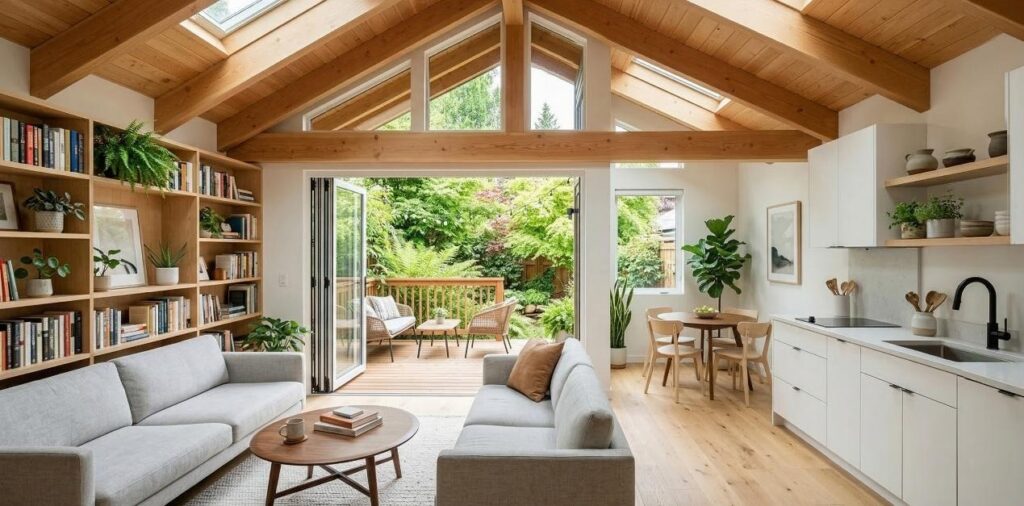
The Rise of Multi-Functional Areas
One of the biggest changes in modern small-scale construction is the move away from single-use rooms. In a traditional house, you might have a dedicated dining room that only gets used on holidays. In a modern small home, every square foot must earn its keep. This is why we see more open floor plans that combine kitchens, living areas, and workspaces into one cohesive flow.
Architects and builders are now using “flex rooms” that can change based on the time of day. A guest bedroom might double as a home office during the week, using a wall-mounted desk or a hideaway bed. By focusing on how a family actually uses their home hour by hour, builders can eliminate wasted space and make a 600-square-foot cottage feel like a full-sized residence.
Vertical Thinking and Smart Storage
When you cannot build out, you build up. Modern small house trends rely heavily on vertical space. This includes using vaulted ceilings to make a room feel airier and more expansive. High ceilings allow for the installation of clerestory windows, which let in natural light without sacrificing privacy or wall space for storage.
Storage is the secret weapon of any small-scale home. Instead of bulky, standalone furniture, modern construction focuses on integrated solutions. Built-in shelving under staircases, floor-to-ceiling kitchen cabinets, and recessed wall niches help keep the floor clear. This keeps the home looking tidy and organized, which is essential for maintaining a sense of calm in a small area. When every item has a specific home, the living space feels much larger than it actually is.
Also Read: Top 4 Smart Storage Solutions for Tight Areas
High-Performance Materials for Durability
In a small home, you interact with every surface more frequently. This means the quality of materials matters even more than in a large mansion. Using durable, high-quality finishes ensures that the home stays looking new despite heavy daily use. For homes in the Seattle area, managing moisture and temperature is also a top priority.
Modern small-scale builds often prioritize high-performance windows and advanced insulation. These features keep energy bills low and ensure the house stays cozy during damp winters. Many homeowners are now looking for a modern home renovation seattle that integrates these energy-efficient upgrades while maximizing the visual appeal of the interior. Choosing the right materials, like quartz counters and engineered wood floors, provides a luxurious feel that can stand up to the rigors of life in a compact space.
Bringing the Outdoors In
One of the most effective ways to maximize the potential of a small home is to connect it to the outdoors. Large glass sliders or folding door systems can turn a living room wall into a portal to a deck or garden. This visual extension of the floor plan makes the house feel like it has no boundaries.
In urban environments, this might mean a small, well-designed patio or a rooftop garden. Even if the outdoor space is tiny, having a direct view of greenery and access to fresh air prevents that “boxed in” feeling. Builders often use matching materials for the indoor floor and the outdoor deck to create a seamless transition. This level of detail is a hallmark of a professional general contractor seattle who understands how to merge architecture with the surrounding environment.
Technology and the Smart Small Home
Technology has played a massive role in the success of small-scale living. Smart home systems allow homeowners to control lighting, climate, and security from their phones, reducing the need for bulky control panels and switches. Integrated appliances are also becoming smaller and more efficient. Drawer-style dishwashers and microwave drawers save precious counter space while providing all the power of their full-sized counterparts.
Lighting is another area where tech makes a difference. Layered lighting schemes, using a mix of recessed cans, pendant lights, and under-cabinet LEDs, allow you to change the mood of the room instantly. Bright task lighting makes a small kitchen functional for cooking, while soft ambient light turns a living area into a relaxing retreat at night.
Final Thoughts on Small House Potential
Building or remodeling a small-scale home is about making choices. It is about prioritizing quality over quantity and function over sheer size. When you focus on smart storage, multi-functional layouts, and high-performance materials, a small home becomes more than just a place to sleep. It becomes a sanctuary that reflects a modern, intentional lifestyle. By working with experts who specialize in these types of projects, you can ensure that every inch of your home is used to its full potential, providing a space that is as beautiful as it is efficient.